Body Horror, Baby
A special-effects artist finds mutation, motherhood, and beauty under the skin.
Published
Practical prosthetic makeup is often associated with transformation, but I’ve come to think of it more specifically as addition. Prosthetics never remove something from the body—they build onto it. They add flesh, age, texture, movement, mutation, ambiguity. Even the most subtle prosthetic makeup is fundamentally about expanding the body beyond what naturally exists there.
Last year, I was contacted by friend and collaborator Jack Haven to create an ambiguous genitalia prosthetic for the serial killer Lil Death in Jane Schoenbrun’s upcoming film Teenage Sex and Death at Camp Miasma. Jack wanted the reveal to feel alien and Cronenbergian. During our meetings, we kept returning to imagery from marine biology, especially sea squirts—strange invertebrates possessing both male and female reproductive systems. Their forms felt sexual, biological, and completely unfamiliar.
What interested me most was creating a body that felt newly possible. Prosthetics have the power to destabilize the body as something fixed. Once material is added convincingly enough, the brain begins accepting it as real.
I’ve worked with Jack on several transformations before. One involved creating a gruesome silicone leg and back skin flap laid over deli meats for a cannibalistic dinner-party editorial for WAIF magazine. Another involved aging Avsha from Lowertown into an elderly person for their music video “Big Thumb.” The process required overlapping facial prosthetics, wrinkles, eye bags, neck folds, and sagging skin. Old-age makeup may seem less extreme than body horror, but it operates on the same principle: adding material to the body until it becomes something else.
That idea is part of why I’m so drawn to the practical effects work in films like Videodrome and Altered States. The effects in those films feel disturbing because they are so biological in nature. Flesh breathes, stretches, pulses, sweats, leaks. The body no longer behaves like a stable object. In Videodrome, Rick Baker's work transformed the human body into something technological and sexual at once: stomach cavities opening like machinery, televisions breathing like organs, skin behaving like media. In Altered States, Dick Smith pioneered the use of air bladders beneath prosthetics to create movement under the skin itself, making the body appear alive in ways it shouldn’t.
That idea of hidden movement beneath the surface has heavily influenced my own work. One of the first times I experimented with air bladders was for a bleeding laceration effect for a friend's music project, Death Dance Music. I connected hidden tubing beneath prosthetics on the neck and wrists to a large syringe system that pumped blood through the wounds live on camera. Later, for Danilo Parra’s short film VLOG, I used similar bladder systems beneath a silicone prosthetic of multiple leeches and a camera fused to someone’s arm, causing the flesh to pulse and inflate unnaturally beneath the surface.
Most recently, I created a large “skin wall” for the feature Gulf of America: a hairy, gooey stretch of silicone flesh soft enough for performers to push their hands through from behind. Hidden bladders allowed blood and fluid to ooze from the wall itself. Effects like these are grotesque, but they also force viewers to confront the body as unstable, vulnerable, and transformable.
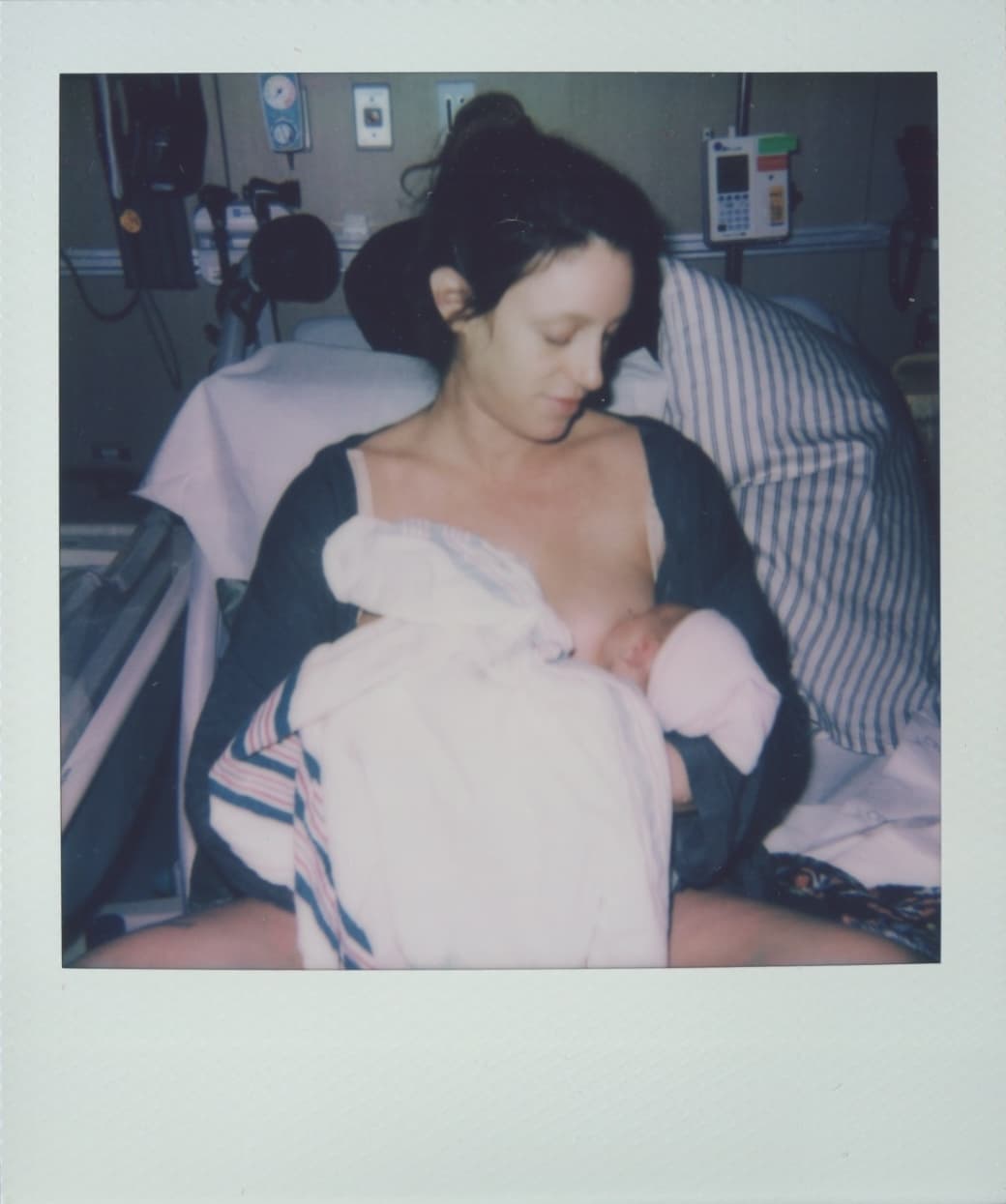
On April 30th, I went through the ultimate real-life special effect experiment within my own body with the conception, pregnancy, and birth of my son Ozzy. Over nine months, I watched my body transform with his being inside me, growing within amniotic fluid and other material as a nearly thirty-pound addition to my usual form. Before announcing my pregnancy online, multiple peers reached out asking if I had applied a prosthetic to myself.
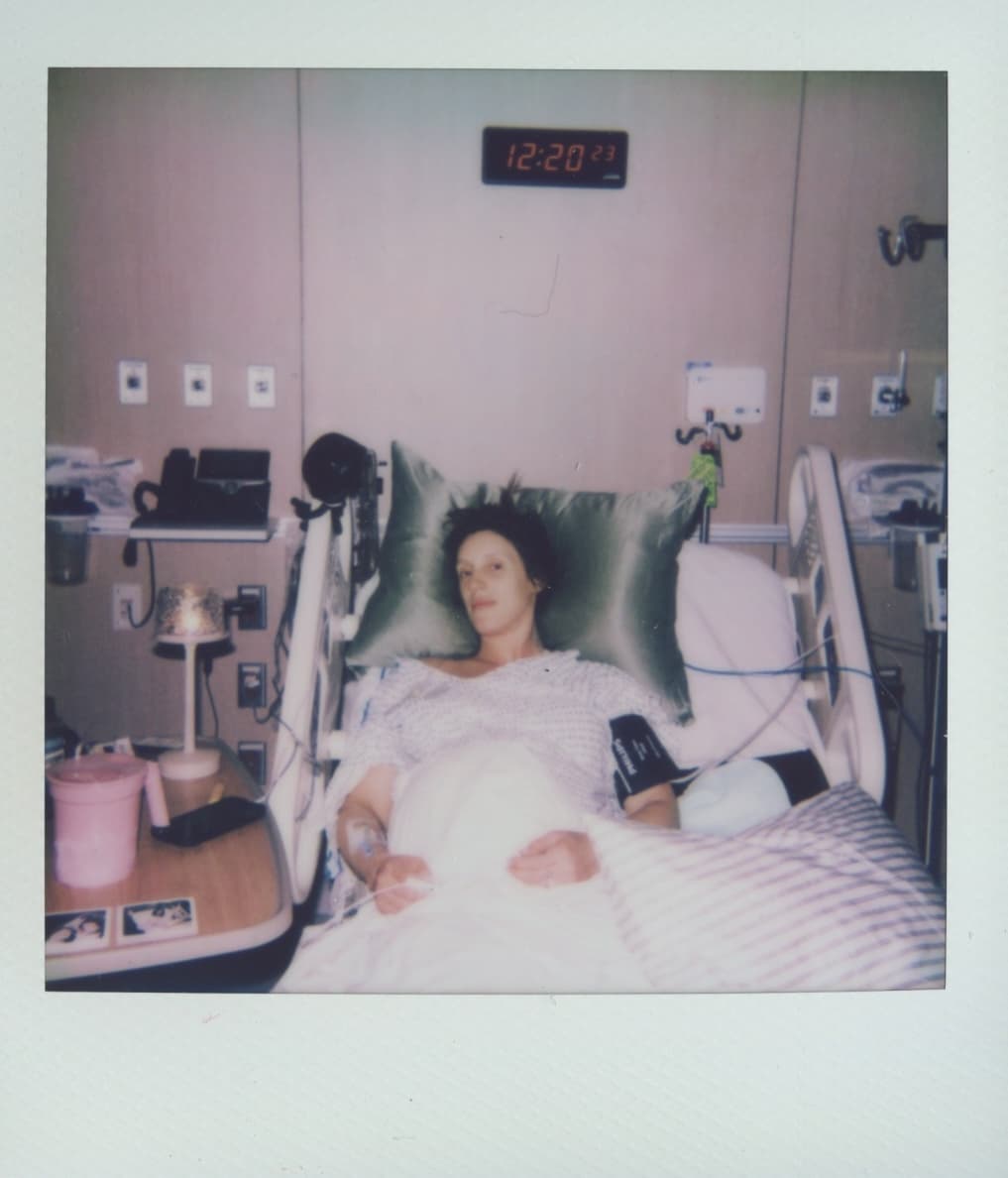
Ozzy began as a little alien bean growing inside my womb, mutating, wiggling, rolling, and convulsing, quite literally resembling the air bladders I had produced on set within my own work. He would hiccup, kick, and squirm throughout the day, and I could see limbs pulse and push outward through my flesh, similarly to the bodily mutations seen in Altered States and Videodrome. For the first time, I wasn’t constructing transformation out of silicone and tubing—I was physically experiencing it within my own body.
As I moved through trimesters, the pregnancy felt like the ultimate example of adding onto the body. For 40 weeks, I felt that little bean and fed him through my umbilical cord, caring for and sharing a body with someone you haven’t seen or met yet, it’s surreal. For years, I've been sculpting wrinkles, growths, wounds, organs, mutations, and all kinds of fleshy additions designed to transform a person into something else. Instead of adding silicone or foam latex, I was carrying another human being. Instead of air bladders creating movement beneath the skin, there was an actual living body moving beneath mine. It completely shifted how I think about transformation. The body isn't a fixed object that occasionally changes—it's constantly capable of becoming something new.
Pregnancy and motherhood have become some of the best physical references I’ll ever have for my future work. Carrying Ozzy made me realize that some of the most surreal bodily phenomena are not science fiction at all, but completely human.
I think that’s the real power of adding onto the body. Prosthetics can disturb, seduce, disguise, exaggerate, or mutate, but they also reveal how flexible our understanding of the body already is. A body can become older, alien, wounded, monstrous, maternal, or entirely unfamiliar through the simple act of adding onto it. The illusion works because, on some level, we already understand the body as unfinished.