Are We in the Land of Plenty?
Prehistorically, all it took to bring sin into the world was the bite of a fruit. Not much has changed. Food today is obscured, fetishized, and sanctioned; it feels like the harbinger of material sin. If spraying on your cookie butter mist will elevate your human experience while living in a town that’s practically a food desert, congrats! You’ve already ascended to a transhuman mode of consumption. You eat through abstraction and a “vibe.” You’re eating, but you don’t eat.
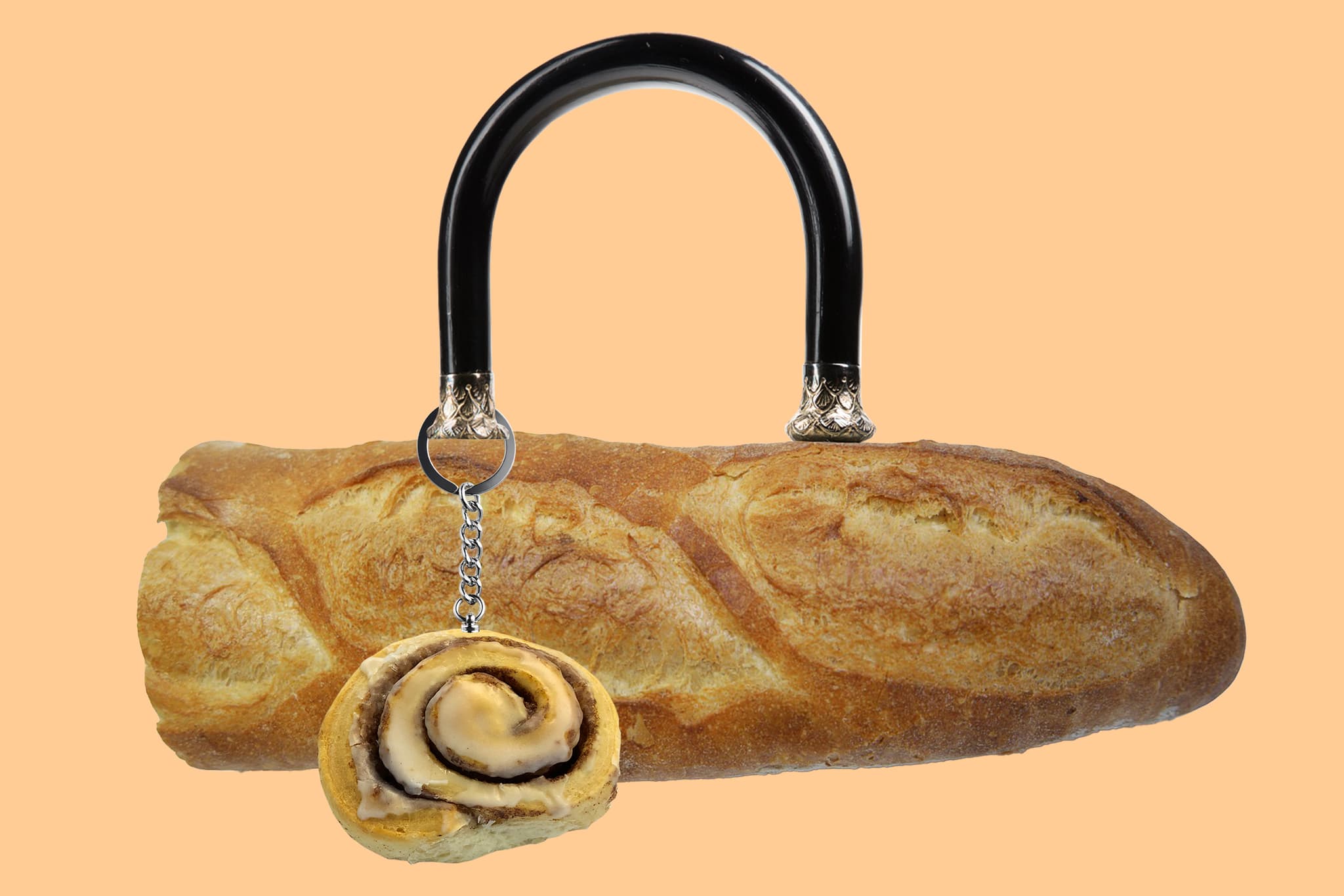
More than 114.6 million households in the US are food insecure, and for marginalized communities, food is a fleeting commodity. While Americans suffer from the inequitable food systems designed to keep us below a humane standard of living, food has found a new dissemination: reinterpretations of itself. We’re engulfed by products and experiences that mimic the sensation of food but offer no edible value. “Food” is now the pistachio-chocolate lafufu you hang alongside the cinnamon-scented sanitizer on your Fendi baguette bag. Perhaps, when you need a little cleanse, you’ll glide your gourmand sanitizer along your hands, avoiding your blueberry-glazed manicure. Everything is a satiety shortcut. Everything is so good you could just eat it. But if you could, you wouldn’t.
The dichotomy is clear—you have a class of people impoverished, for whom food is nutrition unmet, and you have a class of those who micromanage food, so its surplus doesn’t make them look like hogs. Between the two classes, food remains illusory. A collection of semiotic remixes that represent what the mere act of eating should feel like. Whether through deplorably gluttonous mukbangs or sickeningly coy sensory marketing, food is now third-party or rather, a sensation we experience secondhand. Yet, oddly enough, our hunger feels satisfied.
In Simulacra and Simulation, philosopher Jean Baudrillard examines the conditions of reality, as replaced by symbols, signs, and the “illusion of actuality.” He outlines simulated reality in four stages: the sacramental order, wherein representations of reality appear good and aligned to reality; the order of maleficence, where reality is denatured and its representation no longer faithfully depicts it; the order of sorcery, wherein representations are copies of reality that no longer have a source material; and lastly, the simulation or “hyperreality,” where reality as a concept is divorced from lived reality. When you track the recent aesthetic mutations of food, the stages become prominent. Food marketing once reflected the best of food. Then food got bad— everyone had eating disorders, thinspo was on the rise, food was rebranded as calorie intake. Eventually, food as good or bad became a debate.
We’re at the onset of the food hyperreality, where the origin of flavors feels untraceable. The progenitor of your vanilla bath bomb isn’t a vanilla pod, but a synthetic aspiration of vanilla. It’s a symbol of what vanilla might represent, compressed into a consumer good that, ultimately, is unconsumable. While the artificial flavor is not new, our increasingly distorted understanding of what the original flavor should taste like is a by-product of the Baudrillardian simulation.
Generative AI also makes the food landscape look bleak. A deluge of AI-generated restaurants has been deceiving people with their photogenic cheese pulls and delicious edifices. This technology-facilitated acceleration of food image (re)production is a side effect of the general AI accelerationism tainting our virtual landscapes. As our food becomes more visually salivating, it becomes more poisonous to the tongue and increasingly wicked to our morality. Essentially, it is easier to consume and harder to eat. The food image is the new zero-calorie, ketogenic, and GMO-free product hitting our supermarket shelves. The vibe is what tingles our taste buds, and absence is what regulates our conscience.
It’s hard to place whether consuming food simulacra or eating actual food is a response to the political, economic, and social forces determining modern-day consumption. But in this technocratic world, the rules of surveillance and ownership are embedded in how we engage with food. Watching people crunch, slurp, and moan over caricatured food is entertainment, reverberating panem et circenses (bread and circuses) through online infrastructures. The essence of the spectacle is what governs food, as it is no longer just produced but reproduced. In Society of the Spectacle, Guy Debord puts it precisely: “The spectacle in general, as the concrete inversion of life, is the autonomous movement of the non-living.” Guiding the reproduction of food abstractions is no longer human need or a nod to direct experience, but a self-sustaining system of propagation, acting outside the parameters of reality.
Though it’s the human that consumes and curates, it’s the nebulous actor—the system of New Food—that facilitates their actions. Pleasure comes pre-chewed and puked into our mouths by mother bird. Through this orchestrated arrangement, how we engage with our senses, how we experience food, and how we eat promise us grace, while really delivering our fall from it.
The overly idealized image of food offers us salvation from what feels like the sin of eating, and it won’t save us. Eating will feel all the more sinister. So we’ll fall back on eating third-party to coax our hunger back into the background. We’ll become increasingly ravenous for new food symbols to delude us. A rather deceptive cherry on top of the mountain of issues with our food systems. A new feast for the senses is in order, and though everyone is invited to watch, not everyone may be offered a seat at the banquet table.