I Went to Earth and All I Got Was Joni Mitchell-Induced Feelings
Thoughts on the artist's album Clouds and what we actually see when we look at clouds.
By Aarushi Agni
Published
I sat by rocks crying at the sunset while listening to a song about clouds. It was an iconic and classic Friday evening. I hours late to meet two best friends, time and funds mismanaged. I was faced with perennial problems I’d normally ponder from the floor of my apartment. But today I was at Gantry Plaza State Park in Astoria, Queens.
As I walked backwards from the sky I started Joni Mitchell’s album Clouds from the beginning. She sings about falling in love to get through the day, the bustling clangor of a “Chelsea Morning,” and thinks about sending a letter but she “don’t know where [she] stand[s].”
And I wonder if my life is boring because it’s clearly been lived before. The right earbud dies and Joni fades to a whisper in my left ear.
Clouds was released in 1969, named for its song “Both Sides, Now” wherein Mitchell spends time trying and failing to make sense of life, love, and those specters in the sky. I receive it decades later through bits and bytes in the air, on a different sort of cloud.
Whatever opportunity I get in NYC to lie on the ground, I take. So there I was at Gantry, tits spilling toward the East River, out of a Shein shirt. I lay, an obscenity, trying to be alone in open air. A couple was making out to the left of me on the long stone bench. I pressed my skirt down on both sides. Then, before rolling over to face the block-letter LONG ISLAND sign that glares at the Manhattan skyline, I imagine what the sign sees. I strain my selfie arm to fit my body / the rocks / the water / the skyline / the clouds all in the photo. Their bigness distorts the image.
**Rows and floes of angel hair
And ice cream castles in the air
And feather canyons everywhere
I’'ve looked at clouds that way
My namesake is the dawn. Aarushi in Sanskrit means the prismatic colors of the new day's opening. Lately, I’m only awake at that time of day if I’m going to sleep. I rarely see the sun from both sides. Maybe I’m too much “day” for day. Maybe I need to be color in the night. Ugh, metaphors.
**But now they only block the sun
They rain and snow on everyone
So many things I would have done
But clouds got in my way
I choke on the inside of my esophagus as tears overpower, and then rain. I can’t help it. This song, from many years before I was born, narrates my pain so sharply. It makes me think about Mughal-era princesses drawing doodles on silk scraps and getting yelled at by their moms, and people in the 1950’s getting bored on Sundays. The time travel of relating to centuries-old sadgirls like Mitchell is enough to make you cry on its own. No, add in the feeling of being read to filth by her lyrics that seem to speak directly from a hidden pocket in my heart’s left atrium, though I myself did not write them:
**I've looked at clouds from both sides, now
From up and down, and still somehow
It’'s cloud illusions I recall
I really don’t know clouds at all
Joni and I have done this a thousand times. She starts with clouds, then we talk about love, then we land on life, because are there even three other things in the world to go on about?
“Both Sides, Now” is a little quantum packet that holds Joni’s reflections on the illusory nature of clouds. Clouds and love and life look like everything and nothing, a spectrum. Seductive / a performance / transcendent / endless and over.
The other day I walked with another South Asian queerdo up the Little Island slope. We were chasing a sunset but finding it hard to locate on the horizon. Some guy came up to us and mansplained that if the clouds are not out, you won't be able to get a picture of the sunset. “So, the sunset is actually the clouds!”
To which I was like, “Word,” and my friend was like, “Why was that man talking to us?”
There’s something sickening about clouds being the substrate of the sunset.
I teach at a sci-fi and arts summer camp and this year I taught the rainbow. Zooming out, the lesson was about magic and the scientific phenomena that underlie the sublime.
My campers and I shared myths and legends about rainbows. Then the science: Rrainbows work like the prism famous mansplainer Isaac Newton used to split white light into its composite colors. Light (sun) + Prism (rain) = Rainbow!
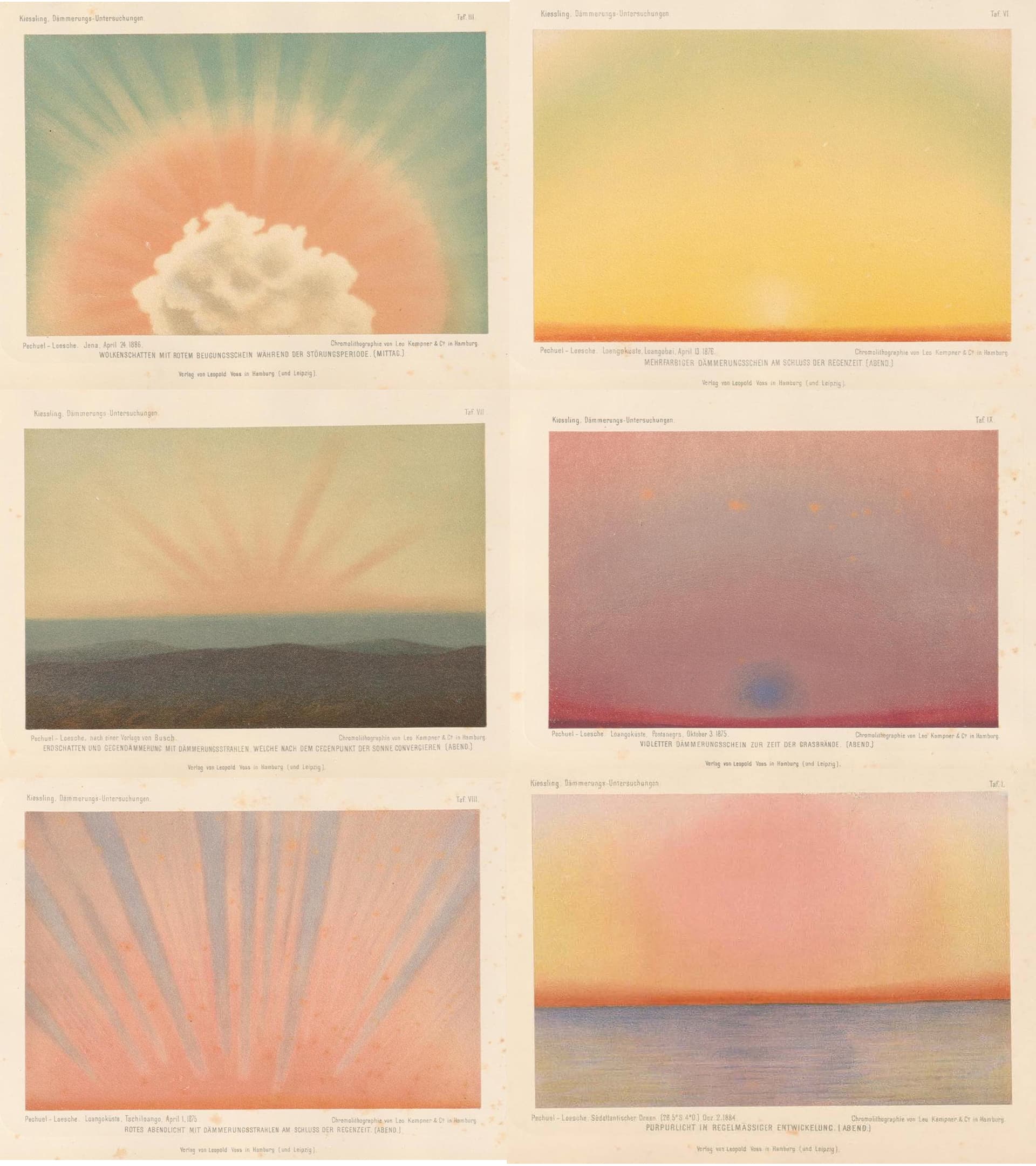
The sunset-cloud phenomenon is much the same. Clouds are just big white blobs of water, vapor, and ice. An angelic choir, they scatter the wavelengths of light to paint the horizon brilliant oranges and blues and pinks and yellows and purples.
I taught my students the electromagnetic spectrum, which explains both Bluetooth and visible light. A green apple absorbs all wavelengths of light except green. What we see with our eyes is the color that isn’t absorbed, like yearning, a presence revealed by absence. Even the sky can’t handle blue.
Now that you know the science, I asked them: Does the rainbow still feel magical?
Their answer was yes. My students delighted in the nuance and bigness of the visible spectrum in all its Roy G. Biv-ian glory. They found rainbows in oil slicks and by shining a flashlight through one of their mom’s old CDs, and at Pride.
Knowing the mechanism of the rainbow didn’t reduce its soul-punch. The science behind the magic seemed only to make it bigger, more infinite, and even harder to make sense of.
Clouds, love, and life are these impossibly vast things that don’t fit anywhere; they overpower our bodies, burst open our faces and break our hearts. Even after you see all their grey and rotten parts, you remember how enchanting they were (are).
And mostly you don’t see anything in hindsight for what it really was, but what it meant to you, whatever myth (or theory) you made of it. And then you’re like, “Wait, did I really ever even really see those clouds, or just all the colors they made me see?” I went to Earth and all I got was this lousy deep inner knowing.
The 1969 Mitchell who stared out her window onto Bleecker Street didn’t look at clouds the way we do, as something we can call to us and remote-control with our hands, though she did pull her music from the cloud-based music platform that shan’t be named in 2022 to protest the spread of vaccine misinformation on its platform.
Clouds these days serve a buffet of music and other digital bits, a buffet so big, in fact, that each individual streamable song must fight with all the others for its place in the market. Gone are the days of diving into deep cuts, lingering on liner notes, and squirreling away B-side credits.
Digital products made by human hands upend our relationship to time and space. Like songs, friendships and love affairs exist asynchronously in the cloud, but still make my face puff and storm, for all their added difficulty. Even with the infinite universe of music streamable via the cloud in my palm, I’m still here, running late, in my finite body, trying not to trip over my laces. The songs persist, untroubled by time.
In 1969, and even today, we have to contend with the fact that some things will never be on-demand. Some things can only be felt in all of their bigness, or in the harsh relief of their absence.
We don’t see love, we see the spell it casts. We don’t see the sunrise, we see the clouds. We don’t feel time, we hear a song. Floating over and through us, a cloud.