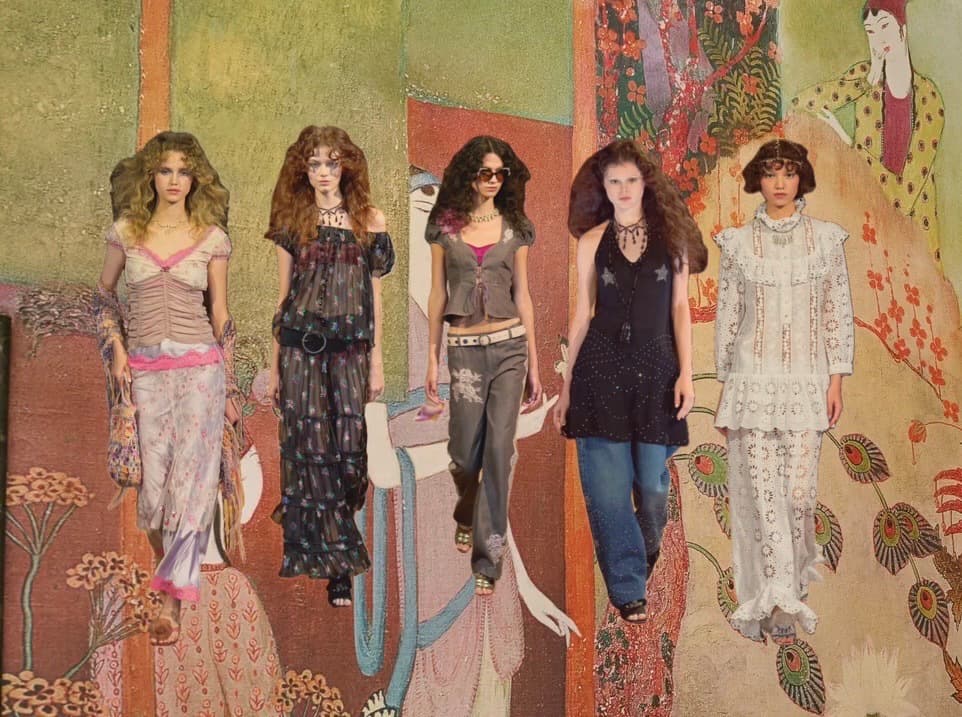
At CONDO, there's no convention center, no booths, no badges. Just a city full of galleries opening their doors.
Published
Art fairs ask you to forget where you are. Maybe you fly in, or maybe you take a cab to a convention center, but regardless of how you got there, you’re spending three days locked away in various halls while the city moves on without you. Wherever you are, it becomes incidental—and only after dark, once the main event is over, does it become activated for schmoozing over hor d'oeuvres. CONDO works the other way around. An international gallery-sharing initiative that travels between cities—London, New York, Shanghai, São Paulo, Mexico City—it inverts the art fair model entirely. Instead of importing dozens of galleries into a fluorescent hall, local galleries in the host city open their existing spaces to host visiting international ones. The city becomes the fair. Which makes sense, considering the infrastructure is already there.
I went to CONDO for the Mexico City iteration and spent several afternoons working my way through the participating galleries. I also worked my way through neighborhoods, shops, restaurants, markets, and a lot of small talk with people who actually inhabit the spaces I was visiting.
Vanessa Carlos started CONDO in London. Pamela Echeverría brought it to Mexico City in 2018, and the reason she did is itself a kind of origin story for the whole spirit of the thing. Years earlier, on a trip to New York, Gavin Brown had handed her the keys to his entire Lower East Side space for a month and a half. "For me, he's the most important gallery that happened in New York, ever," Pamela said. "So that act of generosity really, really moved me, and I was like, I want to do the same for others. It's about returning the favor." Pamela's gallery, LABOR, is now 16 years old and has since passed the CONDO organizational torch to LLANO and PEANA, who organized this year's initiative. This year, LABOR is hosting not another gallery but an artist: a former curator in her 50s who left criticism for fashion, and whose collections, Pamela explained, emerge from curatorial research rather than seasonal trend. "The creation of the pieces comes from the curatorial synthesis. Each piece is one of one." It's the kind of programming choice that probably couldn't survive the math of a booth fee, and is all the more interesting for it.
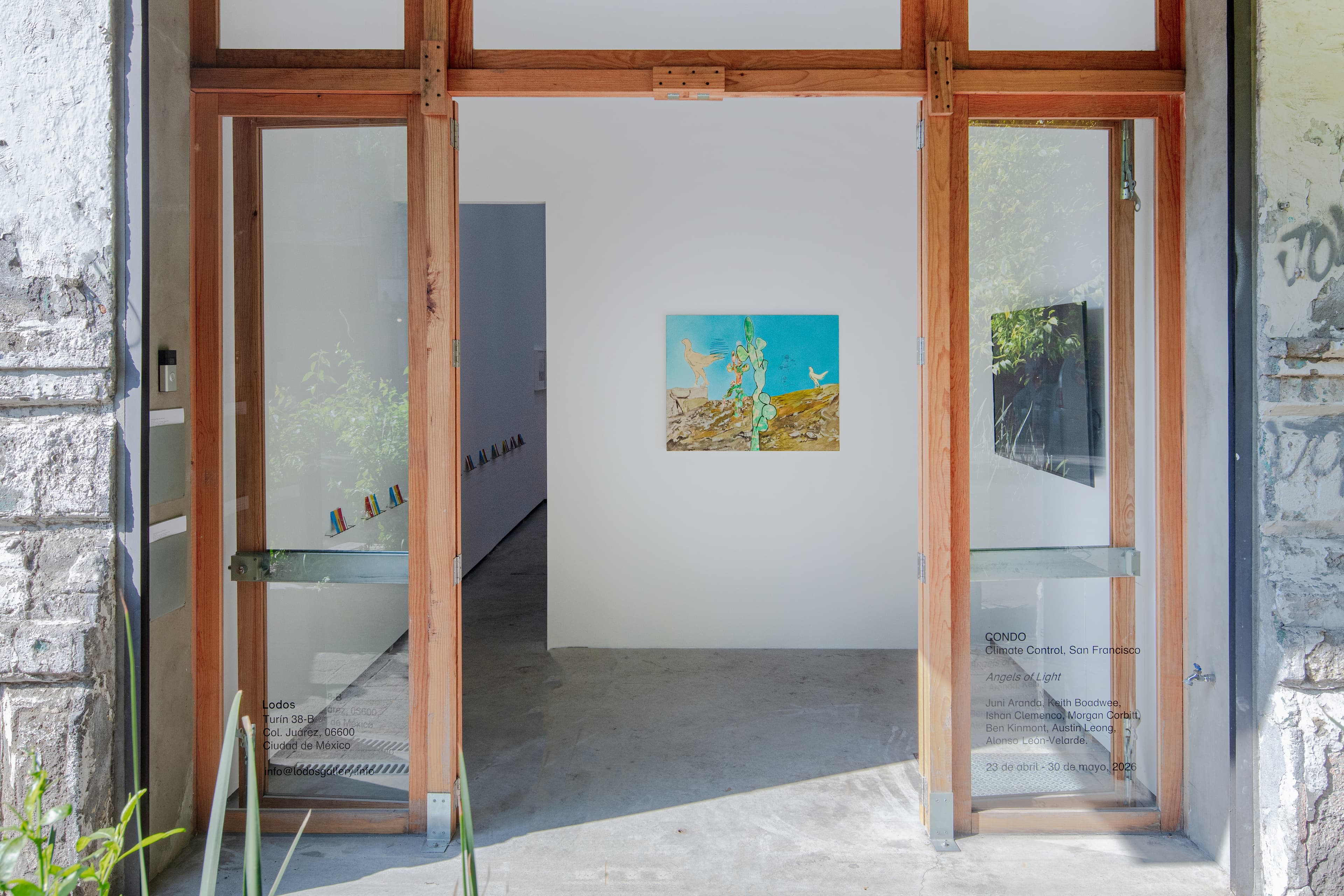
A few neighborhoods over in Juarez at Lodos, Francisco Cordero-Oceguera and Nicolás Colón of Climate Control—a younger gallery from San Francisco—walked me through the show they had put together. The two have known each other since they were students. "There's a certain sensibility to it," Nicolás said of the way the work was arranged. "It's kind of even inevitable, because we were in art school at the same time, looking at certain things." Francisco described the early-2010s moment in Mexico City when a generation of artists started actually making work in the city rather than treating it as a backdrop: "People were coming from abroad and engaging more with creating art here, like artists being artists here, not just bringing their studio and sending work away." Lodos itself has been running for thirteen years and just opened a second space the week before we visited. You can feel the accumulated weight of a program that has watched a city change around it.
At THIRD BORN, hosting Copperfield from London, director Misa Maria Yamaoka walked me through a show built around Jane Bennett's idea of vibrant matter—the notion that objects have agency, that they act on us as much as we act on them. Mariana Ledesma's repurposed circuits hummed near Vytautas Kumža's photographs of altered, opened, faintly uncanny domestic things. The show insists, in the curators' words, that "objects cease to be mere supports and become active participants." A few days later, THIRD BORN hosted a panel on the gallery's roof—which is also where Misa lives and works. It struck me as a useful frame for CONDO itself. The gallery, the neighborhood, the building, the rooftop—these aren't neutral containers for art to happen in. They participate. They shape what gets made and how it's seen. A convention-center booth shapes things too, of course, but mostly in the direction of legibility and sale.
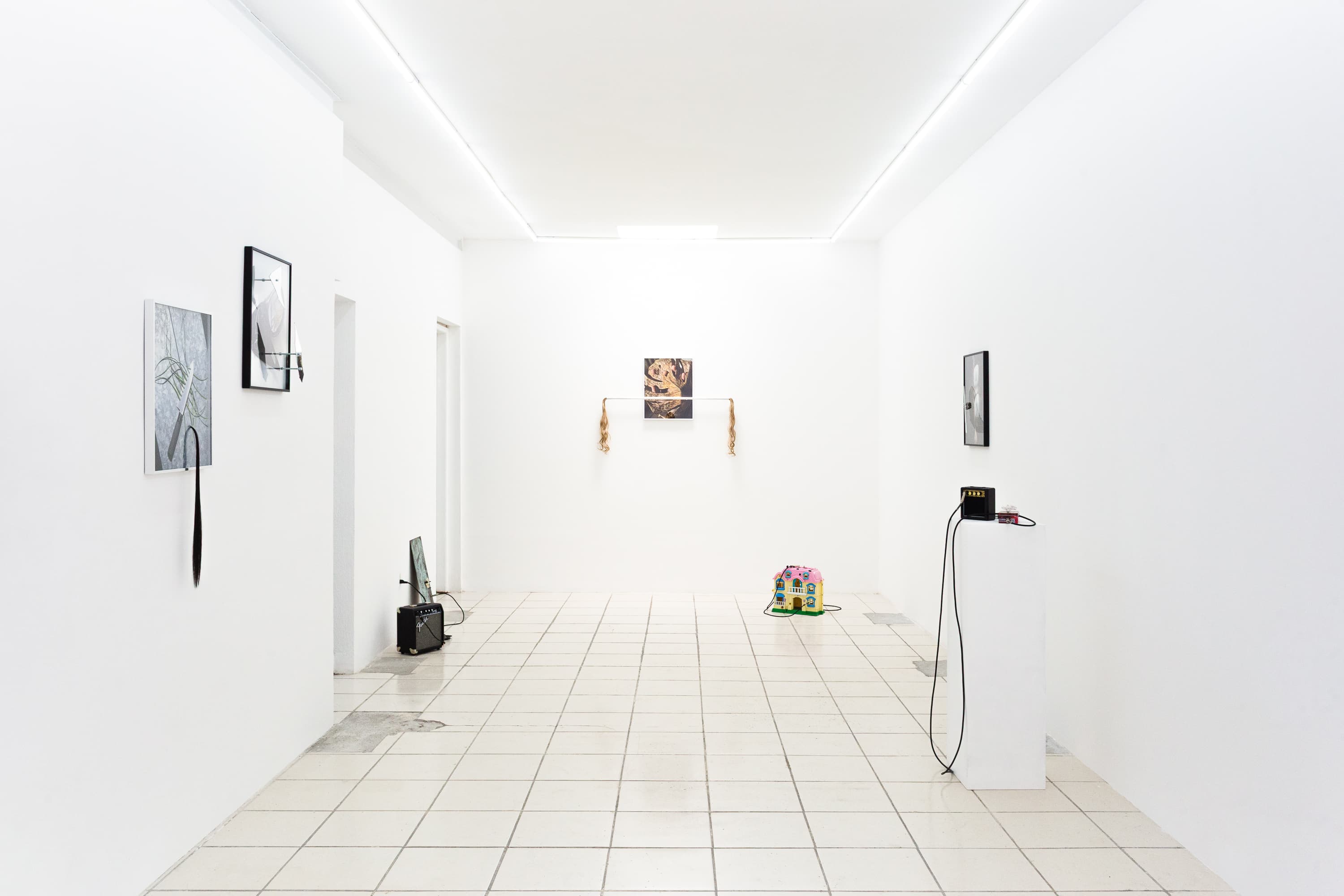
When Things Begin to Act, installation at THIRD BORN. Image courtesy of THIRD BORN. Photo by @asistenciaartistica
This is the part the dominant fair model erases, and it's the part that feels worth protecting. Metropolitan cities have already built the infrastructure that fairs simulate: galleries, restaurants, public transit, museums, a population of people who actually care. You truck the art in, build temporary walls, charge $25,000 for a booth that's active for five days, and then dismantle the whole apparatus. "You're not pressured because you have to pay $25,000 on a booth that will be active for only five days," Pamela said of CONDO. "You are enjoying yourself." That distinction—pressure versus enjoyment, transaction versus exchange—was the basis for every conversation I had.
On the heels of New York's art fair week, where I watched dealers slump against temporary walls and collectors check phones between booths, CONDO appears like an argument. To be clear, it's not anti-commerce. Sales happen, relationships form, careers move forward. But the model insists that the city itself is the medium, not the obstacle. The exchanges that happen there are more specific than the speed-dating choreography of a fair booth. More connected, more outside, more in the room with the actual people doing the work. "I hope this never dies," Pamela said. So do I.