Losing my sister meant learning our existences were more tied—and more eternal—than I could have imagined.
By Emily Manges
Published
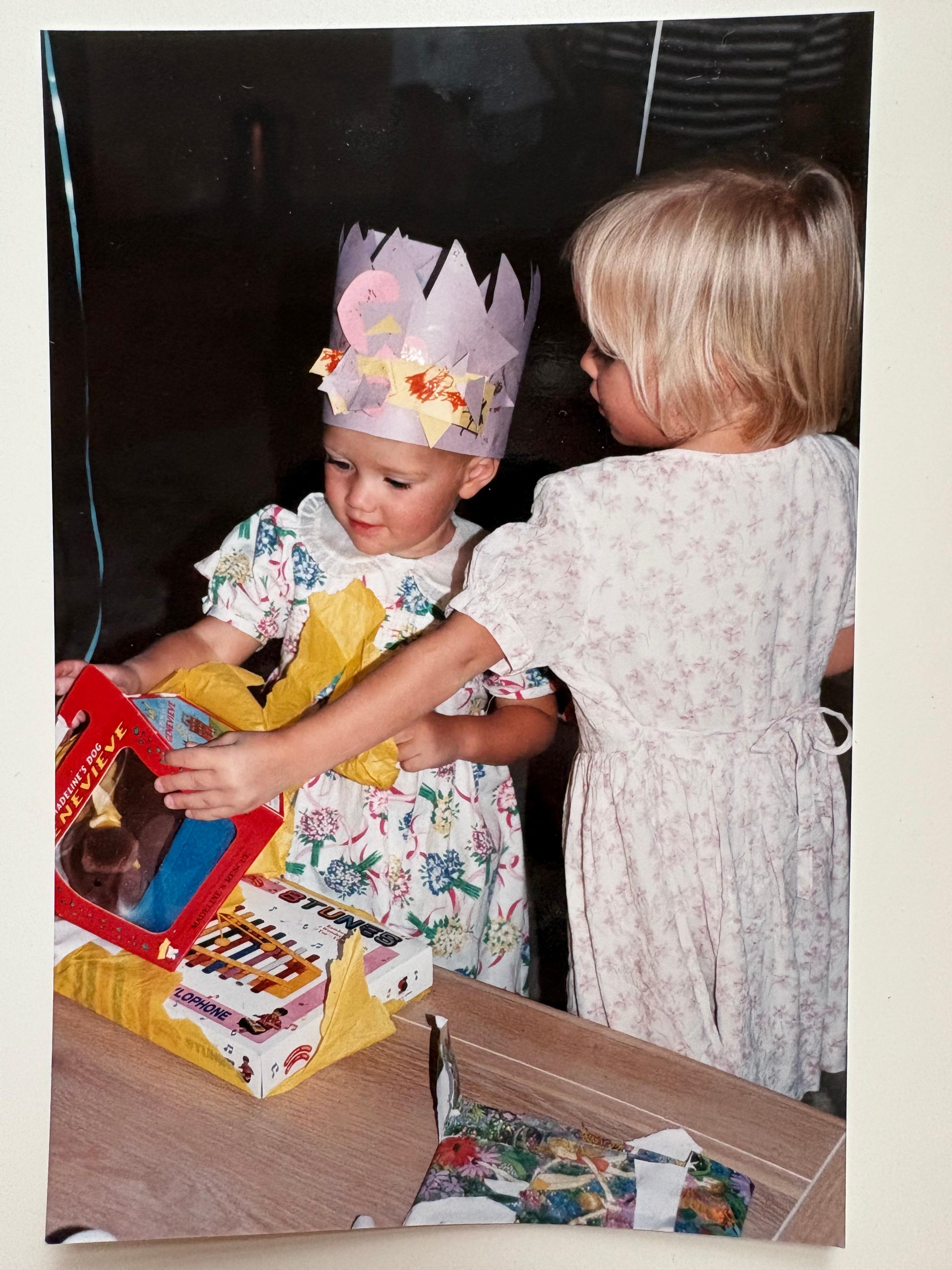
My younger sister Hayley and I used to joke that our lives unfolded in shared chapters. There was our growing-up-in-rural-New-Mexico chapter, our ballet chapter, our East Coast liberal arts chapter, our New York chapter, and the Harvard grad school chapter, which we were both equally surprised we’d managed to manifest at the same time, living fifteen minutes apart in Cambridge.
We tried to live life “for the plot.” Somewhere along the way, I think we started living as though we were writing that plot together. Our stories unfolded in parallel, our ambitions and failures feeding each other. The plot was metaphorical, but also quite literal: we joked, half-seriously, about writing a memoir together someday.
Hayley died this summer in a mountaineering accident. She was 29, two months shy of 30. It happened at dawn in California, while I was stretching on a kitchen floor in Brooklyn. I found out by phone a few hours later.
To preface this, I’m writing from the vantage point of being only a few months in. The grief is still raw, the kind that hasn’t settled into anything I could call wisdom, if you ever get to that point. What I have is closer to field notes from inside it.
I guess I expected death to draw a clean line: before and after. I also expected to feel it mostly as an absence. She was here, and now I can’t call her. Her phone sits on my nightstand.
Instead, the things we treat as the baseline of existence, time and identity, have become slipperier than ever.
Hayley and I were very close, and like many siblings, we defined ourselves in relation to each other. Our identities formed through contrast. She was the outgoing one; I was the quieter one. She was the bookish one; I was the artistic one. I always called her “my other half,” but that’s not quite right, because it implies we weren’t complete without each other. It was more that I was her shadow, and she was mine. We let parts of ourselves live in the other, so we never had to develop them on our own.
That tension was how each of us knew where one ended, and the other began. Since Hayley’s death, a phrase I still have a hard time typing, I’ve found that line increasingly difficult to draw. The tension has collapsed, and I find myself wondering which parts of me are mine, and which are hers, still living where she left them.
I’ve also felt her loss more acutely through her presence than her absence. I first noticed it during a yoga class this summer, in a yurt at Ojo Caliente, a hot spring in rural New Mexico. Hayley and I grew up dancing together, and our bodies were similar, save for the inch she had on me. We used to hold our hands up side by side, marveling at how hard it was to tell them apart.
During the final resting pose, I felt her presence. More than that, I felt myself moving as her. When I opened my eyes and looked down at my hands, I was startled. They were mine, of course. But they were also hers, as they always had been.
It’s happened a few times since: moments when the distinction between us seems to disappear, and I feel her presence almost physically. I’ve since learned this is one of the most common experiences of grief, though few people talk about it.
In The Year of Magical Thinking, Joan Didion describes keeping her husband’s shoes because she thought he'd need them when he returned. I understand that kind of magical thinking, but mine seems to run in the opposite direction. I don’t expect Hayley to come back. Instead, I find myself wondering whether some part of her ever really left.
The strangeness extends beyond presence and identity. Time has started behaving differently, too, turning almost circular. A week before the accident, I dreamed about losing her in exactly the way I did. At the time, it was just a terrible dream. Now I keep returning to it, unsure what to make of the coincidence.
My mom has described a similar feeling, a powerful sense that something was happening to Hayley the day before the accident. She spent that whole day, a full 24 hours before she knew, terribly upset. When I called my aunt a week after it happened to tell her, she said she’d been obsessively thinking about Hayley all week.
That makes me wonder whether, in some big or small way, Hayley knew too. I find myself looking back at things that once seemed ordinary and wondering whether they were part of some grander premonition. All those years of joking about writing a memoir together now feel almost prophetic, as though she were preparing me to write one for both of us, alone.
I’m hesitant to draw any definitive conclusions about what all of this means. But losing Hayley has made me wonder whether our connection is more profound, and perhaps more mysterious, than we fully understand. Whether the boundaries between two people are quite as fixed as we imagine. Maybe a person was never meant to fit inside one life. Maybe we are scattered, like light, across many.
So I will keep writing, in case she is too.