The Arverne Cinema is a patch of sand, some lawn chairs, and the best film crowd in New York.
Published
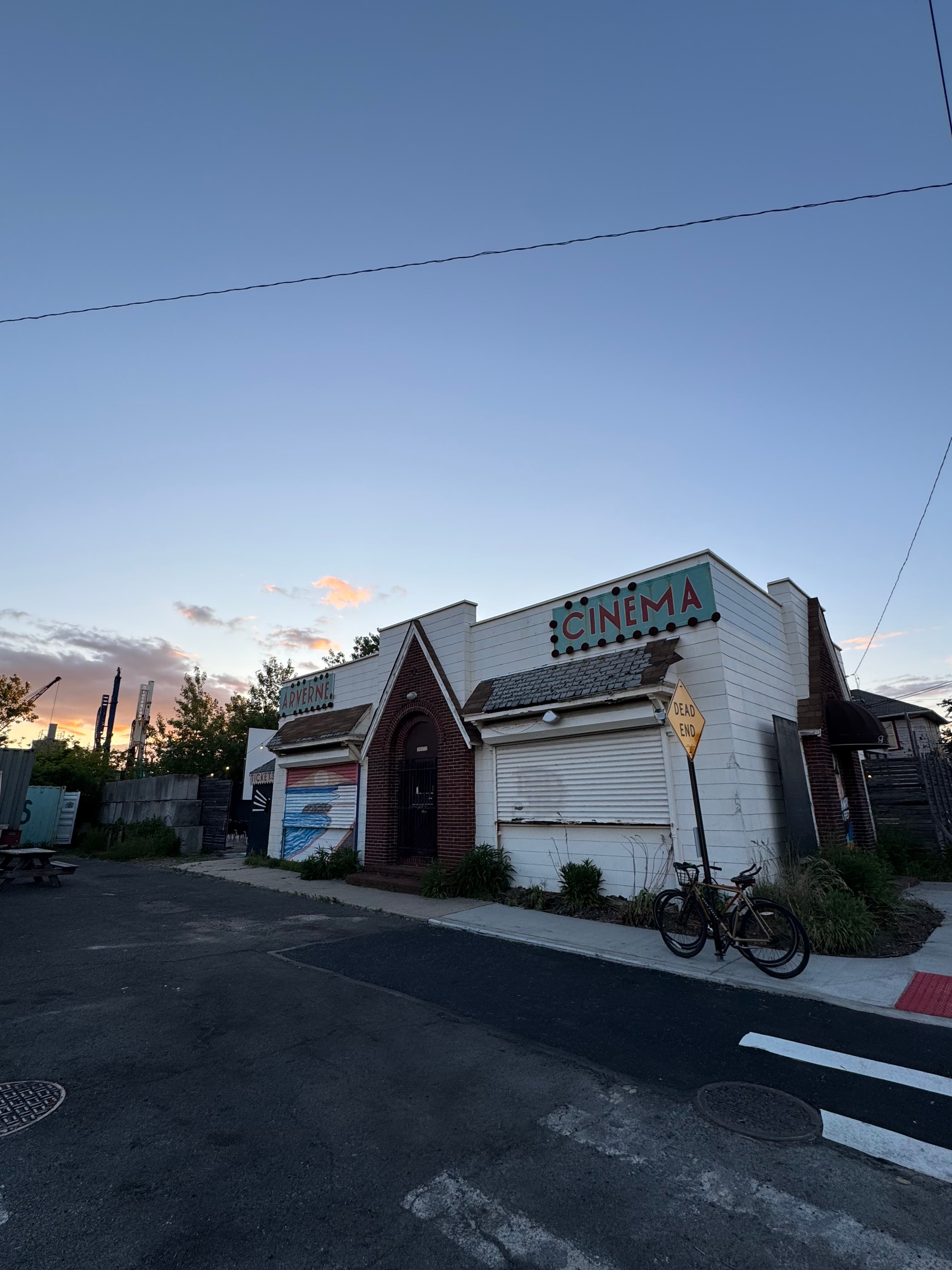
From the cherished multiplexes of Midtown to the low-budget independent silver screens of Ridgewood, the Upper West Side's storied Lincoln Center to Chinatown’s cherished repertory Metrograph, New York City’s abundance of cinemas makes it a cinephile’s wet dream. Both the historic theaters of the New York Film Festival and Tribeca Festival magnetize movie-goers from out of town to the Island of Manhattan. But New York’s single, undoubtedly greatest theater is in the Rockaways: a satellite cinema operating mostly-year-round with rotation of experimental film, cherished classics, and undiscovered gems. To find yourself there, you can take the A train on a quick trip to Beach 67th Street station, disembark, and wind around the block. Pass a huge dispensary, pass a Dunkin Donuts, pass an extremely thin Tiki Bar. Wave to sandy, sexy beachgoers. Grab a Venti Matcha Latte at a triangular Starbucks landlocked in the middle of an intersection. Walk one final block, and there you’ll find the Arverne Cinema. The outdoor Arverne Cinema—a patch of sand and rows of lawn chairs fenced in by cinder blocks, basically in someone's backyard—is the current site (and project) of the Rockaway Film Festival.
The Rockaway Film Festival, back for its 9th year, mixes beach-themed and coastal programming, alongside a fantastic and deep catalog of cinema. This year’s iteration runs September 2-6, with a diverse lineup. Each year, RFF seems to find its own way, prioritizing high quality, interesting, thematically complex films. Last year’s highlights included Hailey Gate’s Sundance standout ATROPIA and two rare 16mm Paul Clipson experimental films.
The Cinema itself has two screens. The first: an indoor theater with a cute bar nestled in the former Rockaway Brewing Company building with space out back to drink Topo Chico and talk about film (read: flirt). The second: an outdoor cinema with rows of red lawn chairs, a rectangle of sand, laid out in front of food trucks from local Rockaway vendors, a makeshift bar, a handful of picnic tables. Fostering connection with the Arvene community is integral to the festival's purpose, which means prioritizing partnerships with local vendors like Brothers, a local fresh-food-focused restaurant famous in the Rockaways.
As I traced my big toe through the sand beneath my seat, I waited for SUMMER TOUR, a documentary focused on young people following Dead & Company’s final tour in 2023. I didn’t know much about it other than that it was produced by Chloe Sevigny. I wondered, would Chloe Sevigny and I be friends? Would she give me fashion advice or dismiss me out of hand? Hard to say. I haven’t met her. Eating my Tofu Sandwich and Kimchi Potato Salad, I was surrounded by my own cast of characters: a couple of tie-dyed Deadheads dancing freely to the Grateful Dead coverband that played for an hour before the show, experimental artists and casting directors and random beachgoers, first-timer-young-film-fans from Buckwick or Chinatown or some-typa-place like that. The comfort and calm gave the theater a singular, polarizing feeling, like in that moment I was in the most interesting place I could possibly be. Many were locals. Many weren’t. I thought of the monotony of the audiences of the theaters I frequent. It’s hard to imagine all of them—this specific assortment of film freaks—together at The Roxy, IFC, Film Forum. With my stained white t-shirt and Uniqlo barrel pants that are two sizes too big for me, I thought, this is a place where I both fit in and could run into Chloë Sevigny.
In SUMMER TOUR, Jerry—a deadhead from a military family whose fantastic optimism shifts from heartening to worrisome—spoke about the chosen family found alongside others also following the Dead’s tour. In the front row, a deadhead clapped along with his hands raised above his head. The branches of a tree swayed like curtains draped just above the screen. As I looked at the crowd, immersed together in a documentary on a Saturday night. Perhaps this is what a movie theater can be: more than a one-way mirror, a place where you can learn and feel just as much from your viewing experience as you can from absorbing the art itself. In most theaters, you can’t see your fellow audience members. You are purely a passenger on a very delightful night train. But in the Rockaways, you can turn to your neighbors, their legs splayed out in the moonlight, in the sunset, and feel a part of it with them too.
When the credits rolled, a mix of people headed to their cars, or to the nearby train back to the city. Some walked together to look out at the water—hand-holding, a kiss, a father with his son on his shoulders. Waiting on the 67th street platform, I saw a lot of friends, or what I thought were friends. I couldn’t know for sure, because the group at the theater had become so synchronous that it would have been totally plausible the travelers had met for the very first time.