Punk, Power, and Censorship from East Berlin to Gaza
Finding parallels in protest movements, from Kirche von Unten to modern Gaza liberation.
Published
An American state senator and her husband are shot, seemingly for their beliefs, in June 2025. Nearly 890 protesters are arrested in London at a Palestine Action protest in September 2025. A political assassination in Utah. A blind and permissive eye turned to genocide. The times are fast and they are vicious. The slide into authoritarianism has been dizzying. The historic parallels to this moment are grim. In a more charming nod to novelty, there are parts of this fascistic attack on free speech and humanity that are distinctly modern.
Monitoring social media posts and using facial scanning recognition to identify protesters have a uniquely 21st-century ring to them. The situation can feel desperate, hopeless. Whether it’s the pandemic, insurrections, or deportations, so much of the last few years has felt unprecedented. It’s easy to feel like an orphan of history, like there is no analogous moment to this one. No one chooses the times they live in. This is not the first time a generation of people has had to fight against an omniscient, authoritarian government. There are examples we can turn to, people who fought the fight before us, and won. A 1980s punk movement from East Berlin called Kirche von Unten (KvU), Church from Below, offers a promising example of how to fight censorship and authoritarianism—and win.
1980s East Germany (the German Democratic Republic, or GDR) gave birth to one of the most raucous, explosive, fun protest movements in history: Kirche von Unten (KvU). Under the aegis of the German protestant church, which was largely spared from state censorship, young German punks were able to meet and commune in church basements. Officially, these meetings were religious services. In practice, they were punk concerts. KvU met in chapel rec rooms and Sunday school classrooms to discuss music and politics, which, to them, were not two distinct subjects. For KvU, music was a political act. Being punk was a political act. Living the way they did was a form of protest. KvU protested against the GDR from the left, envisioning a more free socialist world. Anyone could be a part of KvU. It was a movement largely defined by simply existing. The punk subculture has a distinct way of life, based on community, do-it-yourself, creative expression, and anti-authoritarianism, all of which are completely antithetical to GDR values. KvU was endlessly harassed by the Stasi, the GDR secret police. Officers would bust in on their shows, beating and arresting concertgoers, and would often pull young punks off the street for questioning. Still, the KvU would just keep showing up. One member would get pulled away, and dozens would fill their place until their comrade was back. It was an outpouring of angry, artistic, activist youth that could not be stemmed or intimidated into silence.
It is easy to read the crackdown on artists like Kneecap as a restaging of the Stasi-versus-KvU showdown of yore. An unpopular government serving an overstuffed elite tries to repress the popular voice. A tale as old as time. Increasingly, the atmosphere feels claustrophobic. We are scared to post political sentiments, or express certain opinions, knowing that the eyes of the state are on us. For many, it feels as if the walls of state surveillance are closing in on us. We are led to obey in advance, out of fear. This fear is real and it is valid. It is the product of tangible circumstances. It also, paradoxically, only has power if we let it. Fascism can only thrive if we feed it, if we give it our silence and obedience. We have an obligation to disobey, in small and large ways, in the ways we dress and talk, and the ways we live and work. KvU survived, and in surviving, won, because they were relentless. Punks would be beaten and questioned, and show up to the next concert as if nothing had happened. For them, music was essential. It was their life. KvU endured for years, surviving and ultimately seeing a united Germany.
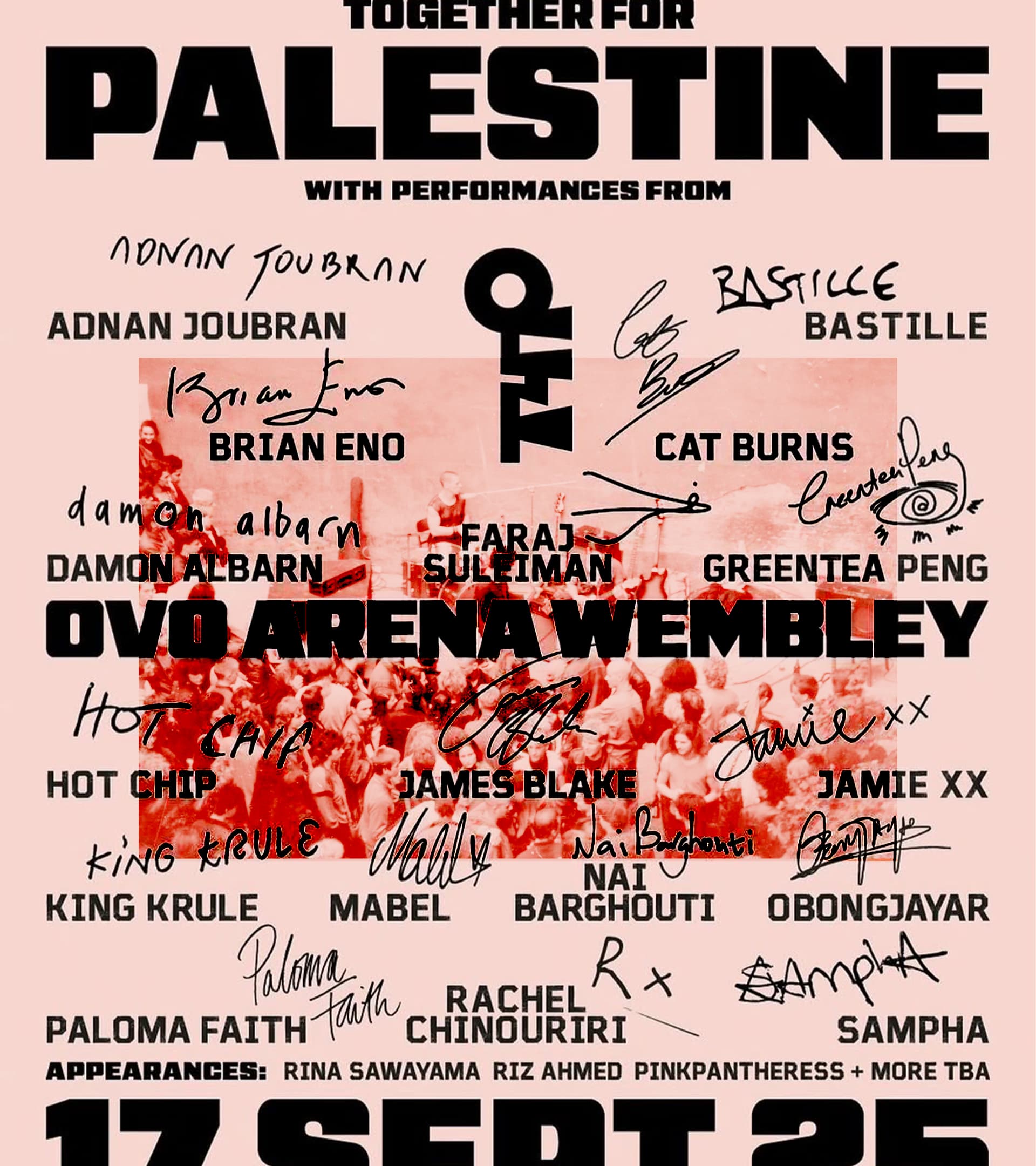
Today, artists are organizing to protect themselves and their fans from the specter of censorship, inspired by Palestinian artists like Elyanna and Nemahsis who have been using their music to voice the strength and beauty of Palestinians long before English-language artists got involved. Brian Eno, with Massive Attack, Fontaines D.C., and other punk and post-punk associated acts have formed the Ethical Syndicate for Palestine, an organization that seeks to protect artists’ right to speak on issues of Palestinian justice. Like the 890 people arrested at London’s Palestine Action protest, like Sally Rooney announcing that she will donate her proceeds to Palestine Action, the power to resist authoritarianism comes from the community. On September 17, Brian Eno hosted the Together for Palestine concert at London’s Wembley Stadium. This show raised approximately $2.2 million for Palestinian charities, and flies in the face of a British government which refuses to administer any real aid to Gaza. The organizing of this concert would be impossible without community support. The lending of big names, such as PinkPantheress or Rina Sawayama, who performed at Together for Palestine, gave protection to attendees, just as crowds of punks at KvU concerts gave safety in numbers to their community. This was what made KvU so radical: it provided togetherness at a time when the state was fostering division and isolation. This isn’t just historical comparison—it’s about how punk-inspired music movements consistently challenge power structures, even, and especially, when governments try to silence them. When people get together and talk, whether at concerts, protests, or concerts-that-become-protests, they interact in a way that is not mediated by the state, and that is, to some degree, free from censorship.
Authoritarianism thrives in silence, and silence begets permission. In times like these, there is an obligation to be loud, and at its core, being loud is what punk is all about. When algorithms are deployed to comb social media for posts containing words like “Gaza” or “Palestine,” it fosters a culture of fear, fear that we could lose our jobs, our visas, or our scholarships. That culture of fear breeds one of silence. This goes beyond the imperial boomerang—the idea that violence deployed by a state in its colony will eventually be deployed in the state itself—because that violence is already being deployed here and now. We have to care about Gaza (and in caring for it, talk about and fight for it) because hundreds of thousands of civilians are being starved and murdered. It is as simple as that. It is inspiring to see artists and protests rise where governments and NGOs fail, but it is critical to remember that these concerts and protests are happening because people are dying. This is the most important thing. Secondary but contemporary to that fact, it’s impossible to ignore what Gaza means for America because the government’s support of the genocide has allowed our rights to be rapidly stripped away. This imperial boomerang has no delay. The violence is being employed here and now. Federal agents walk American streets, the Supreme Court permits race to be a factor in ICE raids, money is hemorrhaged out of universities. So, what can we do? What is there left to do? KvU offers us an answer that is equal parts terrifying and simple: keep showing up. Like young punks who would be interrogated by the Stasi one day then at a gig the next, a movement can only survive if people keep it alive. Freedom exists as long as there are people willing to express that freedom, even when it is dangerous to do so.
It is hard to imagine an end to the war in Palestine. It is hard to imagine peace and trials and aid and the generations of healing that will come. But on September 18, the day after the Together for Palestine concert, aid organizations had 2.2 million more dollars at their disposal. Twelve thousand people came together and stood in solidarity. This required action and presence and hope. This required anger and audacity. If you think in terms of tomorrows, what happened at Together for Palestine was extraordinary. Tomorrow, that $2.2 million will buy food and medicine for thousands of people. It will get them water and clothes. This is the lesson of KvU, to stand together, to be present, and to be relentless.